Two moves are showing up on precast elevations more often than they did five years ago. The first is the unit itself: long, narrow thin brick, Roman, Norman, Meridian and Utility, in place of Modular. The second is the bond: stacked instead of running, third bond, soldier courses at heads and sills, and whole walls of brick stood on end. Both are easy to draw. Both change the arithmetic of a precast panel, and the arithmetic is what this page is for.
Of the 122 projects in the Advanced gallery, 26 use a long format. The 2025 Brick Architecture Awards gave a Gold to Dorothy Martinez Elementary School in Little Elm, Texas, by Pfluger Architects, a wall of King Klinker thin brick in a vertical stacked bond.
Long formats, by the numbers
Modular is 7-5/8 by 2-1/4 in. and has been the default for so long that its 8 in. module is built into most drawings. The long formats keep the Modular course height, or close to it, and stretch the face.
| Unit | Face | Module, running bond (nominal joints) | Units per square foot | Head joints per 10 ft of course |
|---|---|---|---|---|
| Modular | 7-5/8 x 2-1/4 in. | 8 x 2-2/3 in. | 6.75 | 15 |
| Roman | 11-5/8 x 1-5/8 in. | 12 x 2 in. | 6 | 10 |
| Norman | 11-5/8 x 2-1/4 in. | 12 x 2-2/3 in. | 4.5 | 10 |
| King | 9-5/8 x 2-5/8 in. | 10 x 3 in. | 4.8 | 12 |
| Utility | 11-5/8 x 3-5/8 in. | 12 x 4 in. | 3 | 10 |
| Meridian | 15-5/8 x 2-1/4 in. | 16 x 2-2/3 in. | 3.4 | 7.5 |
Fewer units per square foot means fewer head joints, and fewer head joints is the whole visual effect: the wall reads as lines rather than as a grid. It also means fewer pockets to fill at the bed and fewer joints to clean after stripping.
Who makes what, from the Advanced color library: Endicott carries Roman, Norman, King and Utility across all 69 of its colors. MetroBrick carries Norman, King and Utility across its 30. King Klinker makes Norman in 13 colors and Meridian in 4. Corner units vary by maker and format, and the color library lists sizes and corners color by color.

What a long unit changes on the panel
The 12 in. module is the easy one. Three Modular units and joints make 24 in.; two Norman or Roman units make the same 24 in., so an opening drawn on a 24 in. multiple converts from Modular to Norman without moving. One drawn on any other 8 in. step does not. Meridian does not convert: its 16 in. module lands on 48 in. and 96 in. panel widths cleanly and on 60 in. and 120 in. widths with a cut.
Course height is unchanged for Norman and Meridian, so sill and head heights that worked for Modular still work. Roman drops the course to 2 in. and Utility raises it to 4 in., which moves every horizontal line on the elevation. The coursing page has the course tables for each.
Length tolerance matters more as the unit gets longer. A unit that runs long by the width of a hair hardly shows across eight inches; across sixteen, in a stacked bond, it shows. In a precast panel this is the liner’s job, not the mason’s: each brick sits in its own pocket and the joint rib between pockets fixes the joint width, so the brick is located by the tooling rather than by the brick before it.
Bonds beyond running bond
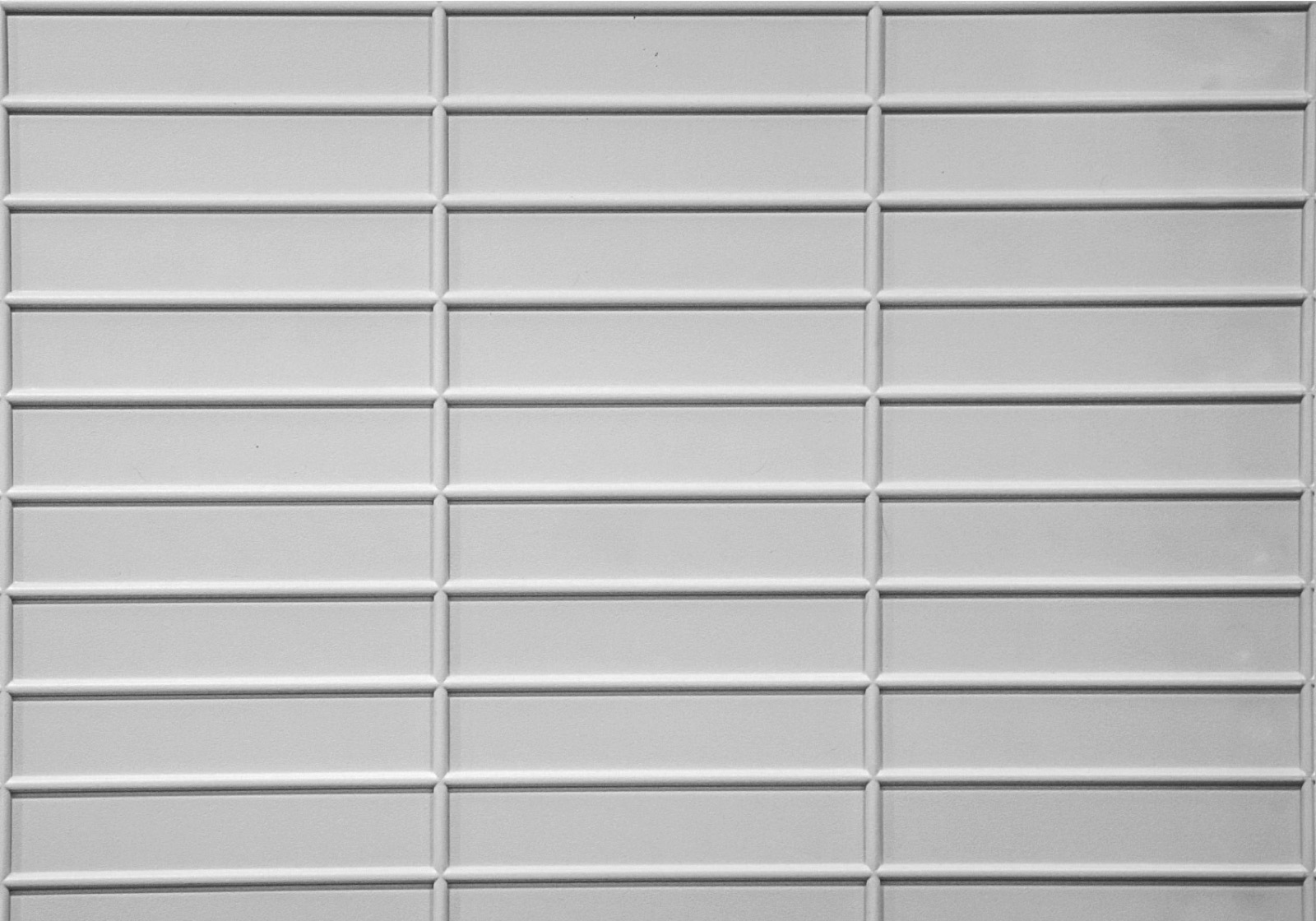
PCI RP 152-25, Appendix E, draws seventeen bond patterns across Modular, Norman, Closure and Utility. Half running bond is one of them. The Advanced liner catalog follows the same spread: of 59 masonry liners, 30 are half bond, 16 are stacked bond, 6 are third bond, and herringbone, basketweave, Dutch, American and random bond have one each.
Each bond moves the head joints, so each one changes what a jamb or a panel edge cuts.
Stacked bond puts every head joint over the one below. Openings have to land on the length module exactly, because there is no offset course to hide a quarter brick. Stacked bond liners are in the catalog for Modular, Closure, Utility and Norman, and for King Klinker’s own formats.
Third bond offsets each course by a third of a unit. The jamb repeats every three courses instead of every two, so an opening width that is off the module shows three different cuts instead of two.
Soldier courses, brick stood on end for one course at a head, a sill or a band, run a module of the brick length plus one joint, 12 in. for Norman, across a wall whose other courses run 8 or 12.
Herringbone and basketweave are rare on an exterior precast panel and common as a field inside a band. Both are cast the same way, from a liner with the pockets set at the angle, and the panel edge is the design problem: the pattern has to stop on a line the edge can follow.

Vertical stacked bond, the arithmetic
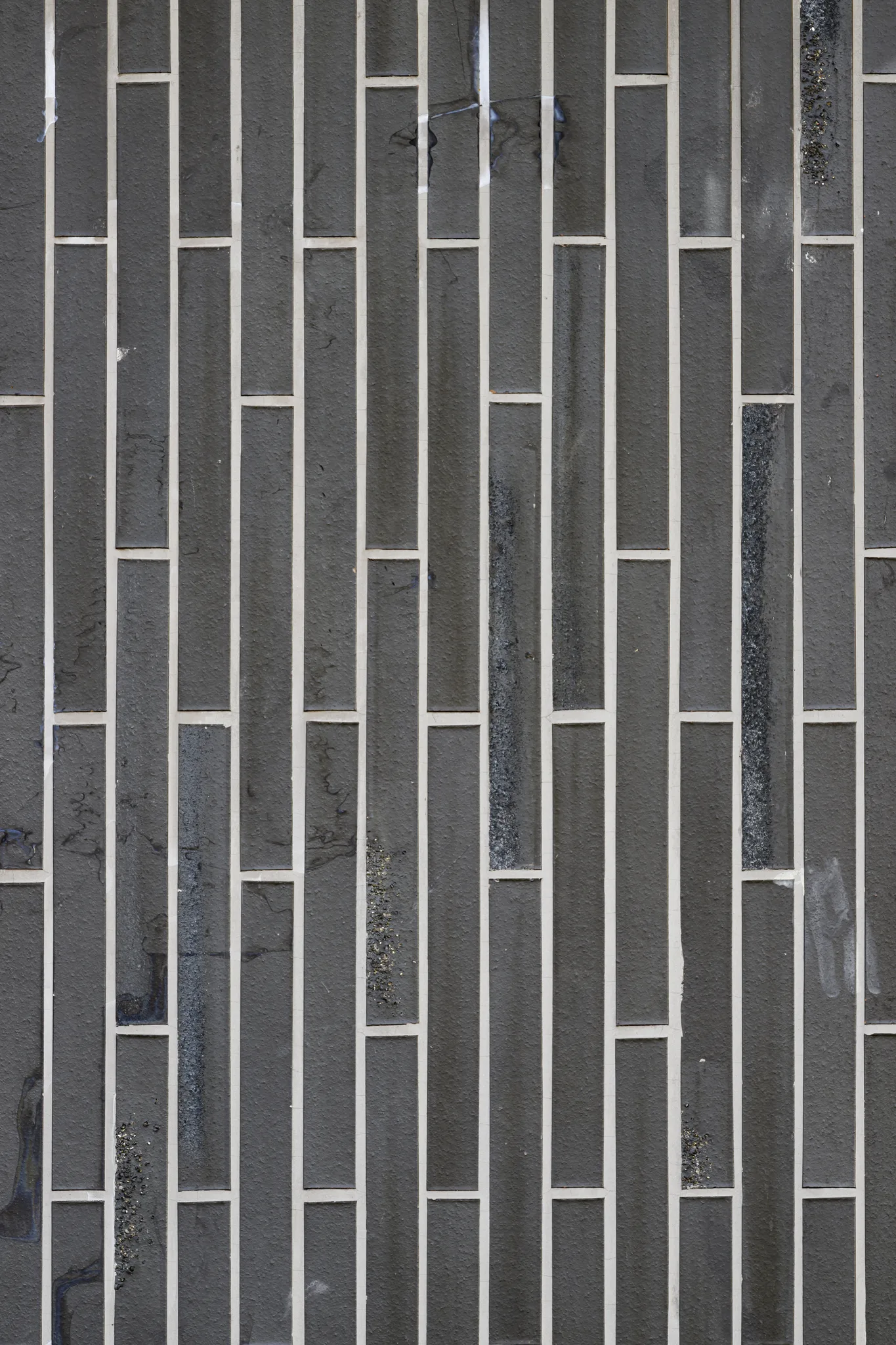
A wall of brick on end is a stacked bond turned ninety degrees, and the numbers turn with it. The brick’s length becomes the course module and its height becomes the module across the wall.
| Unit on end | Course module (length + joint) | Across the wall (height + joint) | Courses in 8 ft |
|---|---|---|---|
| Modular | 8 in. | 2-5/8 in. | 12 |
| King | 10 in. | 3 in. | 9.6 |
| Roman | 12 in. | 2 in. | 8 |
| Norman | 12 in. | 2-5/8 in. | 8 |
| Utility | 12 in. | 4 in. | 8 |
| Meridian | 16 in. | 2-5/8 in. | 6 |
Three things follow from the table.
Opening heights and panel heights land on the course module. A Norman wall on end wants heads, sills and horizontal panel joints on 12 in. lines; a Meridian wall wants 16. An 8 ft panel is eight Norman courses or six Meridian, and a 10 ft panel is ten Norman courses or seven and a half Meridian, which is a cut.
Opening widths and vertical panel joints land on the across-the-wall module, 2-5/8 in. for Norman and Meridian. That is a finer grid than the usual 8 or 12 in., so most widths can be met within a joint, but the panel joint still has to fall on a head joint line or the stack reads broken from the street.
Corners are the detail to settle first. A corner unit stood on end keeps its return leg, 3-5/8 in. on most formats, so the brick turns the corner as a full unit. Where the return is longer than the leg, the corner is a cut unit or a reveal, and that decision belongs on the drawing before the liner is tooled.
Dorothy Martinez Elementary and Momentive in Friendly, West Virginia, both in King Klinker, are whole buildings set this way, not a band or a course. The wall reads as fine vertical lines, with the window heads and sills sitting on the course lines because the drawing put them there.
At the bed
The brick goes face down into the liner pockets, the concrete goes over the back, and the panel comes off the bed with the joints already formed. That is true for every bond. What changes with a long unit or a turned bond is the sheet.
A stacked bond liner is laid out so the pockets repeat on the module in both directions, and the sheet joint falls on a joint rib so it does not show. Turn the bond ninety degrees and the sheet is laid out again: the pocket is the same size, but the repeat, the panel edges and the starter and ender sheets are different, so it is tooled as its own liner. Advanced cuts it to the unit and the direction from the elevation.
Cuts are the cost. Every unit the drawing forces off the module is cut by hand at the bed and set into a pocket that was not made for it. A long format halves the number of units and so halves the cuts an off-module jamb creates, as long as the module is the one the drawing used.
Settle these before the elevation is fixed
- The unit, by name and face size, and the color line it comes from, since not every color is made in every length.
- The bond, and the direction. Running, third, stacked, or stacked on end.
- The module that follows: 8, 10, 12 or 16 in. one way, 2 to 4 in. the other.
- Opening widths and heights on that module, or the decision about where the cut units go.
- Panel sizes that end on a whole unit, and panel joints that fall on a joint line.
- The corner: corner unit, cut unit or reveal.
- The joint color and profile, which read differently at 10 head joints per course foot than at 15.
Send the elevation and the unit to your rep and Advanced lays out the module and the liner before anything is tooled. The brick calculator gives unit counts by format.
Book a lunch and learn
Architects: one hour, at your office or over video, on thin brick formats, bonds and the precast panel, carries 1 LU|HSW. The programs are ALA and AIA approved and meet NCARB standards; Advanced registers the credit and issues the certificates.
Producers: the same hour on your floor, with liner samples in hand, or a plant tour in Sparta, Wisconsin, at 2 to 4 LU|HSW, where the liners are tooled and panels are cast against them.
Common questions
- Which long format thin brick sizes are made for precast?
- Roman at 11-5/8 by 1-5/8 in., Norman at 11-5/8 by 2-1/4 in., Utility at 11-5/8 by 3-5/8 in. and Meridian at 15-5/8 by 2-1/4 in. Endicott and MetroBrick carry Norman and Utility across their full color lines, Endicott adds Roman, and King Klinker makes Norman and Meridian in a shorter list of colors.
- What module does a brick set on end run?
- The brick's length plus one head joint. Roman, Norman and Utility on end run a 12 in. course module, Meridian 16 in., King 10 in. and Modular 8 in. Across the wall the module is the brick height plus a joint, 2-5/8 in. for Norman and Meridian. Openings and panel joints have to land on those numbers.
- Does stacked bond show more variation than running bond?
- In laid masonry it can, because every head joint lines up and a short or long unit shows down the whole stack. In a precast panel the liner pocket sets each brick's position before the pour, so the joint line is fixed by the tooling rather than by the unit next to it. The drawing still has to put openings on the module.
- Can a stacked bond liner be turned to run the brick vertically?
- The pocket geometry is the same, rotated ninety degrees, but the sheet layout, the panel edges and the corner treatment change, so it is tooled as its own liner. Send the elevation and the unit, and Advanced lays out the module and the sheet before anything is cut.
- How do I get continuing education credit on this?
- Book a lunch and learn. One hour at your office or over video carries 1 LU|HSW; the programs are ALA and AIA approved and meet NCARB standards. Producers can book the same hour, or a plant tour in Sparta, Wisconsin, at 2 to 4 LU|HSW, to see the liners tooled and panels cast against them.