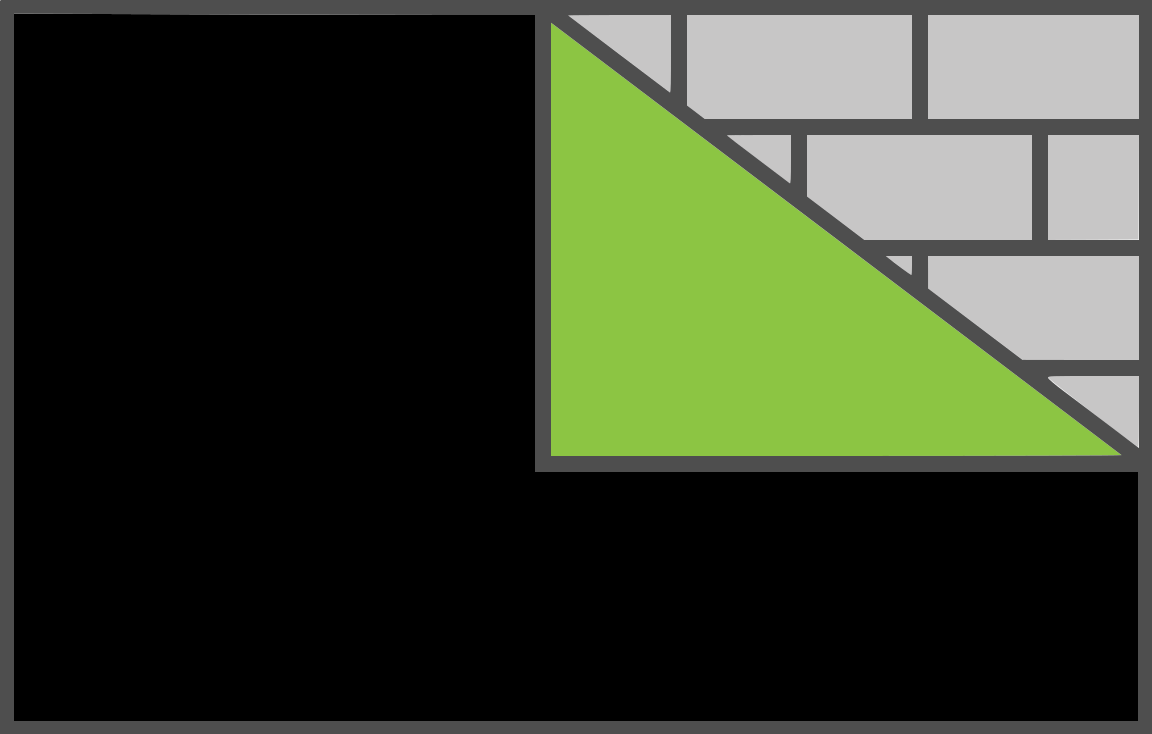
What starter and ender sheets are
A liner run has two ends. The starter sheet begins the pattern at the leading edge of the panel. The ender sheet finishes it at the trailing edge. Both are cut and shaped so the pattern lands where the panel edge lands.
A board pattern ends on a full board or a clean reveal. Brick coursing ends at a full brick or a proper joint.
Setup order: set the starter, run the field liner across the bed, and cap it with the ender. Every panel off that bed matches the one before it.
Why crews trim liner without them
A bed is a fixed length, and a liner pattern repeats on its own spacing. The two rarely divide evenly, so the last stretch of liner ends in the middle of a board or a brick at the panel edge. The crew then cuts the liner by hand in the bed with a knife and a straightedge, on every setup.
What trimming costs
- Labor. Measuring, marking, cutting, and cleaning up shavings before the pour, repeated across a full production run.
- Material. Offcuts are scrap from liner already paid for.
- Consistency. Hand-cut edges vary from panel to panel, so edges do not line up when the panels go on the building. The result is rework or a look nobody accepts.
None of these costs shows on the invoice. PCI guidance for architectural precast puts weight on repeatable, well-planned forms, because consistent panel edges let a precast wall read as one surface.
How longer liners cut joints
Every place two liner sheets butt together is a joint. Each joint has to be taped and sealed so concrete does not creep underneath and leave a ridge on the panel face.
Six foot XXL liners cover more bed with each piece, so the same run takes fewer sheets and has fewer joints:
- Less taping and sealing on every setup
- Fewer seams where concrete can leak through
- Fewer places for the pattern to drift out of line
With starter and ender sheets and longer liners together, the pattern resolves at the panel edges and the run has fewer seams. Setup time per panel and liner scrap both drop, and panel edges stay consistent.
Common questions
- What is a starter sheet and an ender sheet?
- They are the pieces that close out the two ends of a liner run. A starter sheet begins the pattern at the leading edge of a panel, and an ender sheet finishes it at the trailing edge. Both are shaped so the pattern resolves cleanly instead of stopping in the middle of a board or brick.
- Why do crews end up trimming liner in the bed?
- Without starter and ender sheets, the last stretch of liner rarely lands on a clean panel edge. So the crew cuts liner by hand to make the pattern end where the panel does. That trimming eats labor, wastes cut-off material, and leaves edges that do not always match panel to panel.
- How do longer liners cut down on joints?
- A joint happens every place two liner sheets meet. Six foot XXL liners cover more bed with each piece, so a run needs fewer sheets and fewer seams. Fewer joints means less taping and sealing, less chance of concrete leaking through, and a faster bed setup overall.